




AR is not science fiction anymore. It is subtly altering the way we do our shopping, learning, working, navigating, and gaming. Whether it is using your phone camera to try out a pair of sneakers or helping surgeons conduct intricate surgeries through a hologram of human anatomy, the convergence of digital data with the physical environment is slowly turning into a new reality. In this comprehensive article, we cover everything from the actual meaning of AR technology to its inner workings, the various types, and the top industries being impacted by this game-changing innovation in 2025. You will also get a chance to explore some practical use cases, learn about the benefits and drawbacks of this futuristic concept, and see where the technology is headed next.

| KEY TAKEAWAYS• Unlike virtual reality that replaces reality with digital imagery, augmented reality places computer-generated graphics over the physical world.• The worldwide AR market will exceed $198 billion in size by 2025, fuelled by applications in retail, healthcare, and enterprises.• Marker-based, markerless, projection, and superimposition are four fundamental categories responsible for most contemporary implementations.• Sectors such as medicine, education, manufacturing, and online commerce are witnessing significant returns on investment from AR applications.• The integration of smart glasses, spatial computing devices, and 5G is driving Augmented reality towards practicality rather than novelty.• Privacy issues, accessibility concerns, and content moderation continue to be the primary barriers to widespread adoption. |
Augmented Reality Quietly Becoming Part of Everyday Life
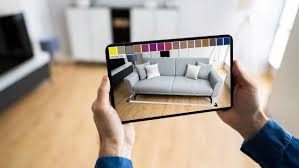
Imagine this: You aim your mobile device at an unoccupied corner of your living room, and suddenly you see a life-size sofa appear right there on the floor – in the exact color scheme, the exact size, casting a shadow that changes with the movement of the sun. As you move around this sofa, look at it from behind, and only realize once you’ve tapped the “Buy” button that this imaginary sofa just became an actual product you want to buy. This seamless marriage of digital imagery and physical existence is what the term “augmented reality” means to the modern world, having graduated from mere novelty into actual usefulness much quicker than most people could realise.
Once confined to research labs and demo videos, it now occupies the devices of over 1.7 billion smartphone owners, adorns the glasses of surgeons in operating theatres, and is found on the assembly lines of automotive manufacturers such as BMW and Boeing. As stated in In this guide, we will provide you with a comprehensive overview of everything that matters about this technology, including its nature, application, usage, success factors, and other information.
What Exactly Is Augmented Reality (and Why People Confuse It)

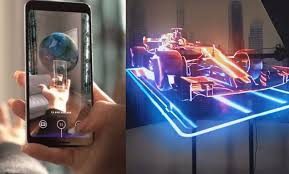
In its most basic form, AR technology superimposes computer-generated visuals, audio, graphics, and animation over what you would normally see through your display device like a phone or headset. The physical world forms the canvas here, while the digital world serves as the paint.
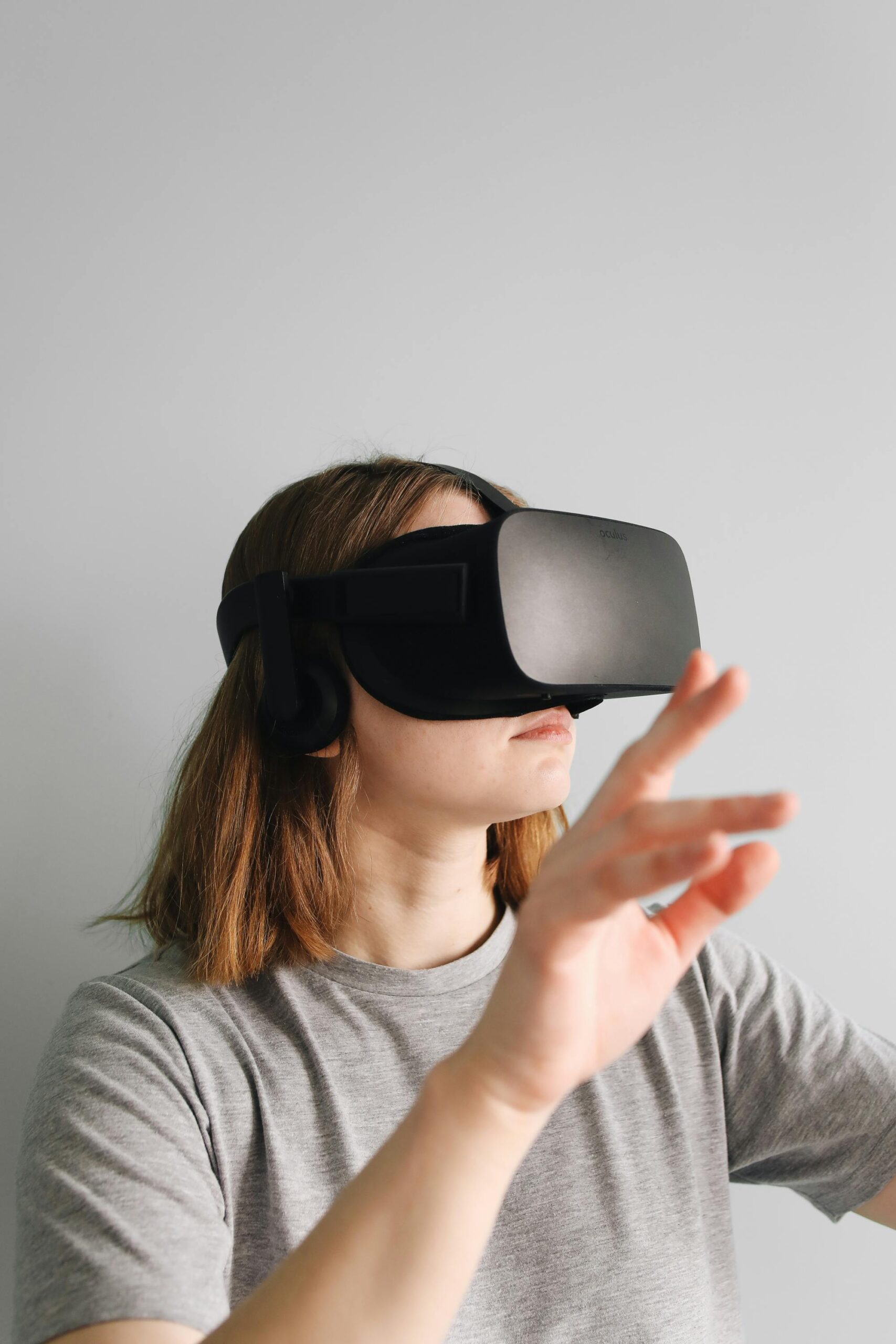
It’s important to note the distinctions because there are many relatives in the technology family tree who are often considered siblings but actually have their own unique characteristics. While VR replaces your reality with a completely computer-generated simulation of reality, MR takes the next step beyond the overlay by integrating the digital and physical worlds into one where an AR ball will be able to bounce off your physical coffee table. Collectively, all three are called Extended Reality (XR). AR is the most user-friendly cousin because it doesn’t require a closed headset to work; only a smartphone is necessary.
A 30-second Origin Story
The earliest head-mounted display was invented by Ivan Sutherland in 1968 – a machine so bulky that it had to be attached to the ceiling. It was only in 1990 that Boeing scientist Tom Caudell used the term “head-mounted display” to refer to digital wiring instructions superimposed on aircraft parts. But it was not until 2016 that Pokémon Go brought 500 million people into the streets of their communities to chase virtual critters. With the introduction of ARKit by Apple and ARCore by Google in 2017, every modern smartphone became an augmented reality platform practically overnight.
How the Magic Actually Happens Under the Hood


The seamless illusion you see depends on four ingredients working in tight harmony: capture, understand, render, and display. Each one has matured dramatically in the last five years.
The Four Basic Building Blocks
• Sensors and cameras – detect depth, movement, lighting, and orientation at up to 60 frames per second.
• Computer vision – finds surface, edge, face, and object recognition, allowing the computer to understand its location relative to everything else.
• SLAM (simultaneous localisation and mapping) – creates an instant 3D map of the world around it while tracking the position of the device within it.
• The rendering engine – generates the digital objects using correct lighting and occlusion, making the virtual reality believable.
Thanks to newer chips such as the Apple A-series Neural Engine and Qualcomm Snapdragon XR2 processors, as well as spatial processing chips like those in Apple Vision Pro and Meta Quest 3, all of these calculations can be done instantly by the device itself. This breakthrough has brought latency below the 20-millisecond point considered instant by our brains.
The Four Main Types You Are Most Likely to Encounter

All forms of immersion don’t operate in the exact same way. The four types of immersion allow you to know which type is suitable for any specific task and why certain applications need a printed code while others will simply launch at startup.
Marker-based
• Triggered by a printed pattern, a QR code, or an image of a recognisable logo Commonly found in magazines, museums, package marketing, and trading cards.
• Simple, reliable and portable, but only available when there’s a printed pattern.
Markerless
• Relies solely on GPS, the accelerometer, the gyroscope and computer vision as a trigger.
• Drives applications such as IKEA Place, Snapchat lenses, Google Live View walking directions, and most current augmented reality shopping applications.
• The most versatile type, as long as lighting conditions are acceptable.
Projection-based
• Shoots light directly onto real surfaces and displays a visual interface over them.
• Common in immersive retail showrooms and design meetings involving car models, as well as theatrical shows.
• Requires no personal mobile device – anyone within reach of the projector can see it.
Superimposition-based
• Places graphics directly on top of an element or object, usually through its recognition.
• Demands the most accurate tracking — precision is the entire point.
Industries Already Reaping Real, Measurable Returns


Hype can last for just so long, but quarterly results don’t. It’s when you see all those conservative, highly-regulated industries using this media format as their primary communication structure that you know they have grown up.
Healthcare and Surgery
The use of augmented reality technology in neurosurgery operations at Johns Hopkins University saw doctors perform more than 1,500 spinal surgeries using the AR-enabled HoloLens xvision system with a success rate exceeding 98%. The visibility of veins under the skin can be achieved using handheld vein finder systems, reducing IV insertions in children by over 50%. Instead of using cadavers to learn anatomy, medical students at Case Western Reserve University now go through full-size 3D models at lower costs by 40%.
Retail and E-Commerce
The Virtual Artist application from Sephora has had more than 200 million try-ons. According to Warby Parker, those that have used its glasses preview service have a doubling of their conversion rate compared to others. On the other hand, Shopify store owners who incorporate a 3D image into a product page enjoy a conversion boost of 94%. It goes without saying that consumers become more confident about purchases when they see how they fit into their lives.
Manufacturing and Field Service
“Boeing mechanics who connect the wiring harnesses of 737 fuselage components following AR guidelines say that their production time has been reduced by 25% and error rate lowered by 40%. Engineers at GE Healthcare put on smart glasses that give them remote expert advice and thereby reduce downtime of hospital equipment.”
Education and Training
According to a study conducted by PwC in 2024, individuals trained on immersive technology are four times faster in completing their programs compared to individuals enrolled in traditional class training. Programs like Merge Cube and Google Expeditions have enabled the incorporation of solar systems and fossils into classrooms in more than 60 nations around the world.
Why This Medium Resonates: The Human Benefits Behind the Numbers


Without the hype, what matters is simply context. Information is helpful precisely at that moment and location when it is needed, rather than being buried away in documentation, search results, or some other window that must be translated into reality.
FIVE CONCRETE WINS FOR USERS AND BUSINESSES
• Increased efficiency – visualize the product in its place before buying, visualize the process before executing it.
• Decreased errors – overlayed visual instructions reduce any confusion when carrying out tasks.
• Enhanced retention and engagement – experiential learning is much more effective compared to conventional methods.
• Lower costs and decreased waste – avoid returns, unnecessary transportation, printing, and travel expenses for training.
• Novel ways of telling stories – let the brands, museums, and storytellers have the whole world as their canvas.
An interesting little anecdote – not long ago, I assisted in assembling a complex flat-pack furniture item with the help of an augmented reality companion app provided by the manufacturer. Rather than struggling with a confusing manual and trying to match numbers on a tiny print, a glowing arrow indicated where every single screw should be placed on the actual wooden surface. An hour-long process was shortened to less than thirty minutes.
The Honest Side: Limitations, Risks, and Open Questions

Balance is necessary here. That which overlays technology and allows for surgery could also be used by a stalker. The map technology that puts the couch in your living room could also put the advertiser there. There are several difficult questions that must be answered in the field at the moment.
Issues That Have Yet To Be Solved
• Privacy – always-connected cameras and spatial maps have more information about you and your environment than any other consumer product before.
• Accessibility – most spatial experiences assume full sight, hearing, and fine motor control; the disability community has yet to be considered.
• Comfortability with hardware – while today’s lightest glasses will still get heavy after an hour, battery life is still less than three hours on high usage.
• Moderation – the creation of virtual space creates additional categories for harassment, vandalism, and misinformation that need to be regulated.
• Digital burnout – the addition of another constant experience layer has some very clear mental health impacts.
Regulators are catching up fast. Europe’s upcoming 2024 AI Act considers spatial computing systems profiling individual people, and the FTC has already hinted at stronger regulation of immersive advertising targeted at children. Companies who want to do things the right way have moved towards local compute, spatial sharing opt-ins, and open data deletion policies – not out of necessity, but to earn user trust.
Where This Is All Heading: A Realistic 2025–2030 Outlook

Skip the flying-car predictions. The near-term roadmap is already visible in shipping products and signed enterprise contracts.
Five Shifts to Watch
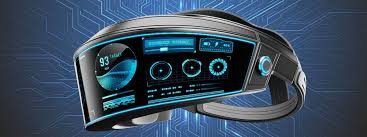
• Wearables for all-day wear — the Orion prototype by Meta, Snap Spectacles 5, and rumoured glasses by Apple all have under-100g designs by 2027.
• Spatial operating systems – visionOS, Android XR, and HorizonOS compete to be the “Windows of space”.
• AI-generated 3D assets – text-to-3D generation by NVIDIA, Luma, and Google cuts asset costs 100-fold.
• 5G and edge computing – heavy processing offloaded, leading to photorealistic experiences with strangers in real time.
• Persistent AR clouds – geographically anchored content visible to everyone in the real world, often referred to as the “world map of the metaverse”.
Goldman Sachs predicts that enterprise investment into immersive technology will rise at an annual compound growth rate of 38% through 2030. It’s not about whether ambient computing happens but who will own the operating layer when it does.
Working With Experienced AR Specialists
When assessing this technology in terms of application for your product or brand or even educational program, the contrast between an easily forgettable demo experience and one that delivers measurable results can often be determined by who’s building it. Below is an example of what kind of company qualifications should be considered:
[Your Company] — Example Company Profile
• Company name: [Your Company Name] — an immersive technology studio founded in 2017.
• Website: [www.yourcompany.com]
• Social Media: LinkedIn 24K followers · Instagram 31K · YouTube 12K subscribers.
• Ratings: 4.9 stars from 250+ reviews on Google Reviews · 4.8 stars on Clutch.
• Projects completed: Over 180 shipped projects in healthcare, retail, automotive, education, etc.
• Enter in your actual details when using.
Frequently Asked Questions

Is this anything like the metaverse?
No, it’s not the same thing. The metaverse is a concept of virtual worlds; AR overlays are one way in. You can play around with augmented reality without ever stepping foot in the metaverse, while you could access the latter through VR experiences as well.
Do I have to buy expensive glasses to experience this?
Absolutely not. All iPhones beginning with XS and many Android devices manufactured in the last five years have full support for AR through ARKit and ARCore frameworks. There are also plenty of free apps like IKEA Place, Google Lens, and Snapchat which provide a quality overview of the platform in less than five minutes.
What is the difference between this and filters on Instagram?
Face filters are simple and limited examples of the more versatile format. While the former uses the camera to apply content to your face, the second uses cameras and machine learning to detect surfaces and understand the three-dimensional space.
Will my children be safe?
Moderate and sensible usage with proper monitoring provides substantial learning benefits in the educational version. Like any other form of screen time, AR requires proper monitoring but should be paired with
Final Thought: A Quiet Revolution Worth Paying Attention To
Revolutionary technologies tend not to emerge with a lot of trumpeting about their existence. It took four decades for electricity to enter our homes, while the internet seemed quaint enough before becoming the bedrock upon which everything was built. And the merging of digital and physical worlds we’ve examined throughout the guide takes the exact same path. You are carrying this world in your pockets, purchasing it at your stores, teaching it in the classrooms of your children, and even using it inside operating theatres that your grandparents may one day visit.
While it doesn’t require any prophetic powers to take advantage of it, it does demand sufficient understanding of it to make informed decisions. Whether by testing a new app yourself, conducting a pilot program within your teams, or simply thinking critically about the emerging experiences around you, there couldn’t be a better moment for engagement than this one — because those who learn its language now will write its scripts a decade later.
If you want to try out what the immersive layer can bring to your own product, brand or education programs, just do what you’ve always done: start small, test objectively and work with partners who