



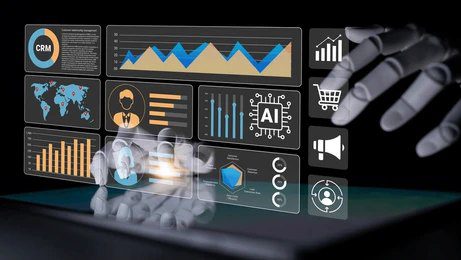
Marketers who ignore AI right now are not just falling behind; they are leaving revenue on the table. From writing ad copy to predicting which customer buys next, AI in digital marketing has moved from a buzzword to a core business function. This guide breaks down everything you need to know, without the fluff.
What is AI in Digital Marketing?
AI in digital marketing is the use of machine learning, automation, and data intelligence to plan, execute, and optimize marketing campaigns. Instead of relying solely on human judgment, AI systems analyse large volumes of data, identify patterns, and make decisions in real time.
Platforms like Google use Smart Bidding to automatically adjust how much you spend on ads based on how likely someone is to take action. Netflix recommends shows based on watching behavior. Spotify creates Discover Weekly without a human curator touching it. These are all AI at work inside marketing systems.
Machine learning powers the prediction engine. Automation handles the execution. Together, they let small teams do what previously required entire departments.
How AI is Transforming Digital Marketing

Personalized Customer Experience
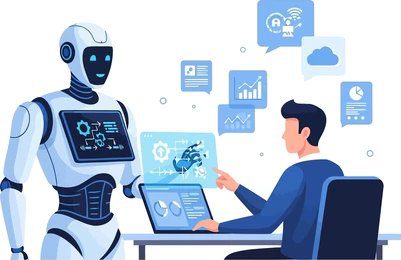
AI allows brands to deliver the right message to the right person at the right time at scale. Amazon’s recommendation engine, which drives roughly 35% of its revenue, does not guess. It learns from behavior, purchase history, and browsing patterns to serve hyper-relevant suggestions.
Dynamic website personalization, personalized email sequences, and custom ad creatives now adapt in real time based on who is viewing them.
Predictive Analytics
Predictive analytics uses historical data to forecast future behavior. Marketers use it to identify which leads are most likely to convert, when someone might stop using a product, and what a user is likely to want next.
Salesforce Einstein and HubSpot’s AI tools score leads automatically, so sales teams focus only on prospects with the highest intent.
Chatbots and Customer Support
AI-powered chatbots handle customer queries 24/7 without adding headcount. Tools like Intercom and Drift qualify leads, answer FAQs, and book meetings all without a human in the loop. Response time drops from hours to seconds.
Content Creation with AI
AI writing tools “ChatGPT, Jasper, and Copy.ai help marketers produce blog outlines, product descriptions, social media captions, and ad copy faster than ever. They do not replace strategic thinking, but they remove the blank-page problem and speed up production significantly.
How to Use AI in Digital Marketing (Step-by-Step)
Step 1: Identify Marketing Goals
Before touching any AI tool, define what you want to achieve. Do you want more qualified leads? Lower cost, be effective for your marketing, per click? Higher email open rates? Your goal determines which AI solution actually makes sense.
Step 2: Choose the Right AI Tools
For content creation, use ChatGPT or Jasper. For SEO, Surfer SEO or Semrush’s AI features work well. For email automation, use Klaviyo or ActiveCampaign. For ad optimization, Google’s Performance Max campaigns and Meta Advantage+ use built-in AI that requires no extra tools.
Step 3: Automate Campaigns
Set up automated workflows that react based on user behavior. For example, if someone leaves items in their shopping cart, they automatically receive a reminder email. A lead who visits your pricing page three times gets flagged for a sales call. Automation platforms like HubSpot, Zapier, and Marketo connect the dots across channels.
Step 4: Analyze Data and Optimize
AI tools surface insights that humans would miss inside large datasets. Use Google Analytics 4’s predictive metrics, or platforms like Hotjar and Crazy Egg, to understand where users drop off and what drives conversions. Then test, adjust, and repeat.
Benefits of AI in Digital Marketing


Improved Efficiency
Tasks that once took days, A/B testing variations, segmenting email lists, and scheduling posts now happen in minutes. AI frees up marketing teams to focus on strategy and creativity instead of repetitive manual work.
Better Targeting
AI combines behavioral, demographic, and contextual data to create highly precise audience groups. Facebook’s lookalike audiences and Google’s audience signals are AI-powered targeting systems that consistently outperform manual segmentation.
Cost Reduction
Smarter targeting means less wasted ad spend. Automated bidding strategies, predictive analytics, and AI-driven content repurposing all help brands achieve more with smaller budgets.
Data-Driven Decisions
Gut feelings are expensive. AI replaces guesswork with evidence. When campaign decisions come from real behavioral data, conversion rates improve, and marketing budgets stretch further.
Pros and Cons of AI in Digital Marketing
Pros of AI in Digital Marketing
Speed: AI executes and optimizes campaigns in real time, something no human team can match at scale.
Accuracy: Machine learning models reduce human error in targeting, bidding, and personalization.
Scalability: AI handles 10,000 personalized emails or 10 million ad impressions with the same infrastructure.
Cons of AI in Digital Marketing
Lack of Human Creativity: AI generates content based on patterns, not genuine emotion or cultural context. Brand storytelling still needs a human touch.
Data Privacy Concerns: AI marketing relies on massive amounts of user data. With GDPR, CCPA, and growing consumer awareness, brands face real compliance risk if data handling is not airtight.
High Implementation Cost: Enterprise AI tools carry significant licensing fees and require skilled people to set up, manage, and interpret results. Smaller businesses can struggle to justify the investment upfront.
Generative AI in Digital Marketing
What is Generative AI?
Generative AI creates original content, text, images, audio, and video from a prompt. Unlike traditional AI that classifies information or makes predictions, generative models like GPT-4, DALL-E, and Sora produce new assets from scratch.
Use Cases in Content, Ads, and Emails
Marketers use generative AI to write first drafts of blog posts, generate hundreds of ad creative variations, personalize email subject lines at scale, and produce product images without a photoshoot. Brands like Coca-Cola and L’Oreal have already run generative AI campaigns that use generative AI, showing how widely this technology is being adopted in real marketing strategies.
Popular Generative AI Tools
ChatGPT and Claude handle long-form writing and strategy development. Midjourney and Adobe Firefly create visual content. ElevenLabs generates realistic voiceovers. Synthesia produces AI-generated video presenters.
Today, most major marketing platforms also include built-in generative AI features, making it easier to create content directly within the tools marketers already use.
AI vs Machine Learning in Digital Marketing
Key Differences
Artificial intelligence is the broad concept of any system that performs tasks that normally require human intelligence. Machine learning is a subset of AI where systems learn from data without being explicitly programmed for each scenario.
Put simply: all machine learning is AI, but not all AI uses machine learning.
How They Work Together
In digital marketing, machine learning trains on your campaign data to improve predictions over time. The broader AI system then uses those predictions to automate decisions, adjusting bids, personalizing content, and flagging anomalies. They are not competitors. They are layers of the same engine.
Top AI Tools for Digital Marketing (2026)
AI Content Tools: ChatGPT, Claude, Jasper, Copy.ai, Writesonic
SEO Tools: Surfer SEO, Semrush, Clearscope, Alli AI
Automation Tools: HubSpot, ActiveCampaign, Marketo, Zapier
Analytics Tools: Google Analytics 4, Triple Whale, Northbeam, Hotjar
Each category has options for different budgets. Start with one tool per function before stacking multiple platforms.
Future of AI in Digital Marketing


Trends and Predictions
Agentic AI systems that plan and execute multi-step tasks autonomously are the next major shift. Imagine an AI that identifies a drop in conversion rates, writes new ad copy, tests it, and reallocates budget, all without a human approving each step.
Search is also transforming. Google’s AI Overviews and conversational search mean brands need to optimize for answers, not just keywords. GEO (Generative Engine Optimization) is already a real practice in 2026.
Is AI Replacing Digital Marketers?
No, but it is raising the bar for what marketers need to know. Repetitive execution roles will shrink. Strategic, creative, and analytical roles will grow. The marketers who learn to direct AI tools will outperform those who compete against them.
Conclusion
AI in digital marketing is no longer optional for brands that want to grow efficiently. From personalization and predictive analytics to generative content and autonomous campaigns, the tools are mature, accessible, and proven.
Start with clear goals, choose one or two tools, and build from there. The compounding advantage of AI comes from consistent use over time, not from doing everything at once.
If this guide helped you, explore more on content strategy, SEO, and marketing automation or subscribe for weekly insights on what’s working right now.
Frequently Asked Questions
What is AI in digital marketing? AI in digital marketing uses machine learning and automation to plan, personalize, and optimize campaigns. It allows marketers to analyze data at scale, target audiences more precisely, and reduce manual work across channels.
How is AI used in digital marketing? AI is used for content creation, predictive lead scoring, chatbots, dynamic ad targeting, email personalization, and campaign automation. Tools like ChatGPT, HubSpot, and Google’s Performance Max all apply AI in different ways.
What are the benefits of AI in digital marketing? The main benefits include improved efficiency, better audience targeting, reduced ad spend waste, and data-driven decision-making that removes guesswork from campaign strategy.
What are the disadvantages of AI in digital marketing? Key drawbacks include a lack of genuine human creativity, data privacy and compliance risks, and high upfront costs for enterprise-level tools. Small teams may also face a steep learning curve.
What is generative AI in digital marketing? Generative AI creates original content, such as text, images, audio, and video, from a prompt. Marketers use it to produce ad copy variations, blog drafts, email subject lines, and visual assets faster than traditional production allows.
Is AI replacing digital marketers? AI is replacing repetitive tasks, not marketers. Professionals who can use AI tools strategically, directing them, interpreting outputs, and applying creative judgment will be more valuable, not less.