



Technology does not slow down, and in 2026, that’s more evident than ever. From smart automation transforming entire industries to improved connectivity making remote work easier, the latest tech trends are changing how businesses function and how people go about their daily lives.
This guide covers every major trend, what it means for you, and why staying ahead matters more now than it did even two years ago.
Overview of Technology Trends in 2026
Three key forces drive almost every trend on this list: artificial intelligence, automation, and digital transformation. These are no longer just buzzwords. They are the core foundation of modern business strategy.
AI now powers decisions that once required entire teams. Automation reduces costs in areas like supply chains, customer service, and back-office operations. Digital transformation, which once meant moving files to the cloud, now means rebuilding entire workflows from the ground up. Every trend below connects back to at least one of these three drivers.
Top Latest Technology Trends in 2026

1. Artificial Intelligence Expansion
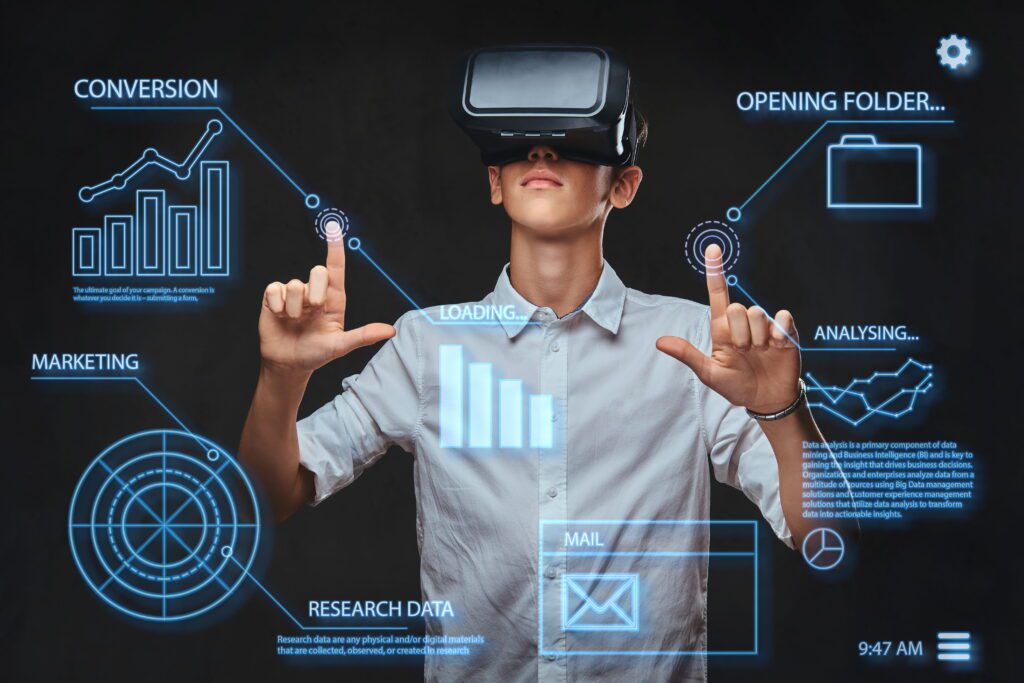
AI trends in 2026 centre on one idea: AI doing more with less human input. Large language models now handle complex reasoning tasks, not just text generation. In addition, multimodal AI processes text, images, audio, and video together.
Businesses are now using AI agents that complete multi-step tasks autonomously. In healthcare, AI help detect diseases earlier. Retailers use AI to personalize experiences at scale. The era of AI as a tool has shifted into AI as a collaborator.
2. Machine Learning and Data Science
Predictive analytics moved from large enterprises to being accessible for mid-size companies. Machine learning models now train faster and require less labelled data than before.
Businesses use data-driven decisions to reduce waste, forecast demand, and identify risks before they become costly. Real-time analytics tools have also made it possible for smaller teams to compete with larger organizations that once had monopolies on data infrastructure.
3. Cloud Computing Growth
Multi-cloud strategies dominate 2026. Organizations no longer depend on a single provider. Instead, they distribute workloads across platforms like Amazon Web Services, Google Cloud, and Microsoft Azure, as well as specialized services, choosing each one based on factors such as cost, performance, and compliance requirements.
Serverless computing and edge-cloud hybrid setups reduce delays and improve reliability. Remote teams rely on cloud infrastructure for collaboration, storage, and security. Cloud spending continues to grow because traditional on-premise infrastructure cannot keep up with modern demands.
4. Cybersecurity Advancements
Cyber threats are growing along with technology. Ransomware attacks have become more targeted and continue to increase. In 2026, organizations treat cybersecurity as a core part of their business rather than an IT afterthought.
Zero-trust architecture has become the standard security approach. AI-powered threat detection helps identify unusual activity before breaches occur. Biometric authentication is increasingly used to reduce reliance on passwords, which are still one of the most common ways systems are attacked.
5. Internet of Things
Smart devices connect everything from a home temperature controller to industrial machinery. In manufacturing, IOT deployments can predict equipment failures before they occur, helping to significantly reduce downtime.
Smart homes combine energy management, security, and convenience into a single system. Cities use IoT sensors to manage traffic, reduce energy waste, and monitor air quality in real time.
6. 5G and Connectivity
5G networks now cover most urban areas globally, and the improvement in mobile performance is noticeable. Downloads that once took minutes now take only seconds. Lower latency also enables technologies that need near-instant responses, such as remote surgery, autonomous vehicles, and augmented reality.
For businesses, 5G means mobile-first becomes a genuine competitive strategy, not just a checkbox.
7. Blockchain Technology
Blockchain use cases now go far beyond cryptocurrency. Areas like supply chain verification, digital identity management, and healthcare record security all benefit from blockchain’s ability to resist tampering and maintain secure, reliable records.
Decentralized finance continues to grow, but businesses are mainly focusing on transparency and the ability to audit transactions. Smart contracts automate agreements without intermediaries, helping reduce costs and processing time.
Emerging Technologies to Watch in 2026


Three technologies sit just below mainstream adoption but will define the next decade.
Augmented and virtual reality are now widely used in business settings such as employee training, architecture visualization, and remote collaboration. At the same time, more consumers are adopting these technologies as headsets become lighter, more comfortable, and more affordable.
Quantum computing is still mostly in the experimental stage, but companies in industries like pharmaceuticals and logistics are already working with quantum technology companies to solve complex problems that traditional computers cannot handle efficiently.
Edge computing means processing data closer to where it is generated instead of sending everything to central servers far away. This helps reduce delays (latency) and lowers data transfer costs (bandwidth). It is especially important for IoT devices and real-time analytics, where quick responses are critical.
Impact of These Trends on Businesses
Companies that adopt these trends quickly gain real advantages. Automation helps reduce operational costs and allows skilled employees to focus on more important work. AI-driven customer service handles volume without reducing quality. Cloud and 5G together make distributed teams as productive as centralized ones.
The businesses struggling most are those treating technology adoption as optional. In 2026, digital transformation is not a future project. It is a survival strategy.
Future of Technology Beyond 2026
The overall direction is moving toward closer integration between humans and machines. Brain-computer interfaces, which are still in early clinical trials, could completely change how people interact with software in the future. General-purpose AI agents that can run entire business functions on their own now seem much closer than they did five years ago.
At the same time, sustainable technology is becoming more important. Green data centres, energy-efficient chips, and circular hardware design are being developed in response to increasing pressure on the tech industry to reduce its environmental impact.
Conclusion
The latest technology trends in 2026 share a common thread: they make systems smarter, faster, and more connected. AI, automation, cybersecurity, cloud computing, 5G, IoT, and blockchain are not isolated developments. They reinforce each other and compound in impact.
Staying informed about these trends means making better decisions about tools, talent, and strategy. Whether you run a startup or lead a large organization, understanding what technology can do today directly shapes what your business can achieve tomorrow.
Frequently Asked Questions
What are the latest technology trends in 2026? The top trends include AI expansion, machine learning, 5G connectivity, cloud computing, IoT, cybersecurity advancements, and blockchain. Each reflects a broader shift toward automation and data-driven decision-making across industries.
Which technology is growing fastest in 2026? Artificial intelligence leads all growth metrics. AI adoption across healthcare, finance, retail, and manufacturing accelerated faster in 2025 and 2026 than in any previous period. Edge computing and 5G infrastructure also show exceptional growth rates.
How will AI impact the future of work? AI automates repetitive tasks and supports complex decision-making, which shifts human roles toward creativity, strategy, and oversight. Most analysts project that AI will create new job categories while transforming existing ones rather than simply eliminating them.
What role does 5G play in shaping technology trends in 2026? 5G acts as the backbone for several 2026 tech trends, including IoT expansion, edge computing, and real-time AI applications. Faster speeds and ultra-low latency make it possible to run data-heavy applications on mobile networks that previously required fixed broadband infrastructure.
Is blockchain still relevant in 2026 beyond cryptocurrency? Blockchain remains highly relevant, especially in supply chain management, digital identity verification, and healthcare data security. Enterprises now prioritize blockchain for its auditability and transparency rather than its financial applications, making it a practical tool for compliance-heavy industries.