



Key takeaways
• NVIDIA 2026 release features a multi-modal foundation model with remarkable advancements in reasoning and efficiency.
• Design of the model targets Blackwell-class GPUs, reducing inference costs by about 40%.
• There is increased adoption within enterprises in sectors including healthcare, robotics, finance, and creativity.
• Access to the model is provided through NVIDIA NIM microservices and Hugging Face, among others.
• The launch marks the beginning of competition between NVIDIA, OpenAI, Google DeepMind, and Anthropic.
A New Era Begins as NVIDIA Steps Deeper Into Foundation Models

Whenever NVIDIA unveils new AI models, the whole tech world stops to take notice. And in 2026, NVIDIA came out with the most exciting foundation model ever, combining cutting-edge reasoning ability, multi-modal processing, and unmatched GPU efficiency. For a long time, NVIDIA had been known only as the provider of the hardware for almost all breakthroughs in the field of AI. But now, with this launch, NVIDIA is stepping up its game and has become a direct competitor to the labs using its products.
The following analysis will give you a comprehensive insight into the topic.
Why the NVIDIA New AI Model Launch Matters in 2026

This timing is not by coincidence. The industry need for generators, autonomous agents, and real-time reasoning engines has seen exponential growth.The customers want a model that is fast, cheap, and controllable. This product from NVIDIA addresses all three aspects together, while also capitalizing on NVIDIA’s strong synergy between hardware and software.
According to Forbes, industry analysts have repeatedly pointed out that whoever controls the inference layer controls the economics of AI. With this launch, NVIDIA is sending out a clear message that it will control both ends of the spectrum.
Inside the Architecture of NVIDIA’s New AI Model

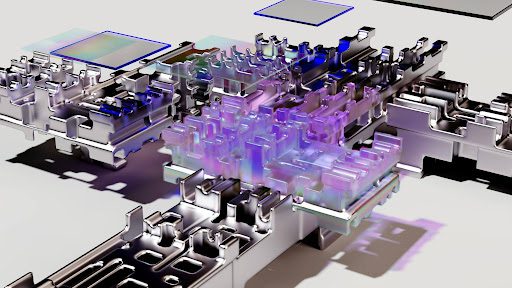
The architecture features a mixture-of-experts backbone with a densely connected reasoning core, enabling the model to allocate tokens according to their difficulty. Thus, easy tasks are solved by simpler experts, whereas complex tasks trigger deeper specialised layers. Overall, the model appears to be performant enough for practical use cases but still retains sufficient capabilities for scientific and engineering tasks.
Training was said to involve trillions of multimodal tokens, including text, code, tabular data, images, and artificial reasoning chains produced by previous NVIDIA models.
Core Capabilities That Set This Release Apart


This is not an insignificant upgrade, but rather an extensive list of features that can handle a variety of productive and imaginative functions relevant to companies and developers.
• Reasoning about long context with millions of tokens for legal, medical, and academic applications.
• Multimodal understanding directly of images, video frames, audio clips, and structured documents.
• Tool usage and agentic flows via integrated function calls and memory operations.
• Generation of code specific to CUDA, Python, TypeScript, and modern data platforms.
• Low-latency inference tailored for the Blackwell and future Rubin GPUs.
Performance Benchmarks Compared to Earlier Generations

Initial benchmarks reveal notable improvements over previous versions of NVIDIA Nemotron and parity in performance with state-of-the-art closed-source counterparts. In widely used evaluation tasks such as MMLU-Pro, GPQA, and HumanEval, the new model ranks among the best performers with a considerably higher token/second rate.
Even more remarkable is its energy efficiency profile. Based on internal evaluations, the model requires about 40% less to execute than its predecessor, resulting in tangible cost benefits for organisations performing large-scale computations.
Real-World Use Cases Across Industries
• Healthcare teams using the model for summarizing patient histories and diagnostics.
• Banking organisations that use the agent for detecting fraud.
• Firms in robotics using the agent for warehouse operations and last-mile deliveries.
• Businesses in media and entertainment creating storyboards, audio narration, and animated videos.
• Technology firms that speed up development work through improved dev platforms.
How Developers and Enterprises Can Access the Model


The access will be provided using NVIDIA NIM micro services and the NVIDIA API catalog, Hugging Face, as well as collaborations with Amazon Web Services, Microsoft Azure, Google Cloud, and Oracle. The open weights of the selected models allow research laboratories and startups to tune the model for specific domains without moving to other platforms.
For users who want full management solutions, this detailed launch guide on NVIDIA’s official newsroom site explains the pricing plans, latency assurances, and enterprise services.
Ecosystem, Partners, and Community Reception

NVIDIA, which has its headquarters in Santa Clara and operates in nvidia.com, has created an incredibly robust community of developers within the industry. With over 24 million followers on LinkedIn, 3 million on X, and impressive ratings on business review sites like Gartner Peer Insights, where it is rated at 4.7 out of 5 stars based on 1,200+ reviews, the organization goes into this launch with immense credibility.
Commentary from independent sources featured on the Wikipedia page for NVIDIA, alongside feedback from key partners, indicates that there is significant traction already and a pipeline of integrations planned for the year 2026.
Considerations Before Adopting the Model
• Assess workload suitability: agentic workloads will be best suited, whereas conversational loads may not require a move.
• Consider GPU availability; the demand for Blackwell-class infrastructure is high.
• Conduct a review of data governance policies before feeding context to any foundation model.
• Prepare for fine-tuning costs if your industry needs specialised vocabularies.
Frequently Asked Questions
What would be the major strength of NVIDIA’s new AI model in 2026?
The key strength will be the unique blend of outstanding reasoning abilities and extremely low cost of inference, achieved through extensive optimisation for NVIDIA proprietary GPU architectures.
Is the model open source?
Some versions will be available with open weights for study and commercial fine-tuning, but the most advanced setups will be provided via managed APIs and enterprise-level contracts.
Would it be suitable for small startups to use it?
Absolutely. By leveraging Hugging Face, NIM microservices, and pay-per-use cloud services, early-stage firms can create prototypes without significant initial investments in infrastructure.
What is its performance compared to other OpenAI and Google DeepMind models?
Public benchmark tests show that it ranks among the highest performers, especially excelling in long-term reasoning, multimodal applications, and economical processing, though closed-source solutions maintain superiority in some creative writing assessments.
Could the model operate on legacy NVIDIA GPUs?
It can operate on H100 and even L40S systems for smaller models, but full-scale operation requires specialised tuning for Blackwell and future Rubin chipsets.
Final Thoughts on the 2026 Launch
The announcement of 2026 represents a watershed moment. NVIDIA is no longer simply the provider of picks and shovels for the AI gold rush. They have become one of the miners themselves, with a system that is quick, efficient, and affordable. From the perspective of software developers, it provides greater freedom and tools to get the job done. From the perspective of enterprises, it gives a solid option to consider from one of the world’s leading hardware manufacturers.
If you are planning your AI strategy for the next 18 months, this product launch should be on your radar screen. Study the documentation, test it yourself, and explore the potential benefits of a closer integration between hardware and software systems.