




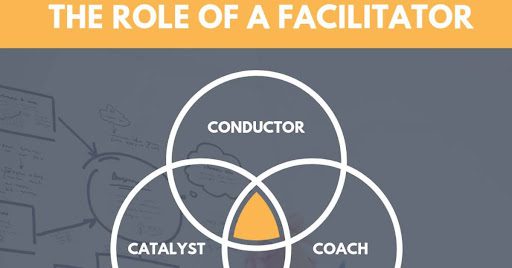
What is a facilitator and why knowing it matters It’s important to know what a facilitator is in today’s workplaces, schools and communities. A facilitator leads the discussion, encourages teamwork and makes sure everyone participates. They are opportune places to share ideas and to progress together. It can be boiled down: The facilitator doesn’t facilitate the group, but rather facilitates the group’s facilitating itself.
Facilitators are critical in today’s modern US organizations. They should not be leading with outcomes; they are directing a process that will lead to the eventual outcome. Whether in the boardroom, classroom, or living room, facilitators bridge between ideas and people, individuals and goals.
Defining the Concept of a Facilitator and its Generalised Role
A facilitator is someone who seeks to make us all work well together. A facilitator is someone who helps a group of people who have a common objective to communicate better with one another. A facilitator does not have the same personal stake in the outcome, and is there to watch more on how a discussion takes place rather than what happens.
Facilitators set the agenda, keep the conversation moving and everyone on track in a workplace setting. They make sure that everybody’s voice is heard, even in situations where power and personality dynamics can get in the way of free communication.
The Facilitator’s Role in Today’s Workplace

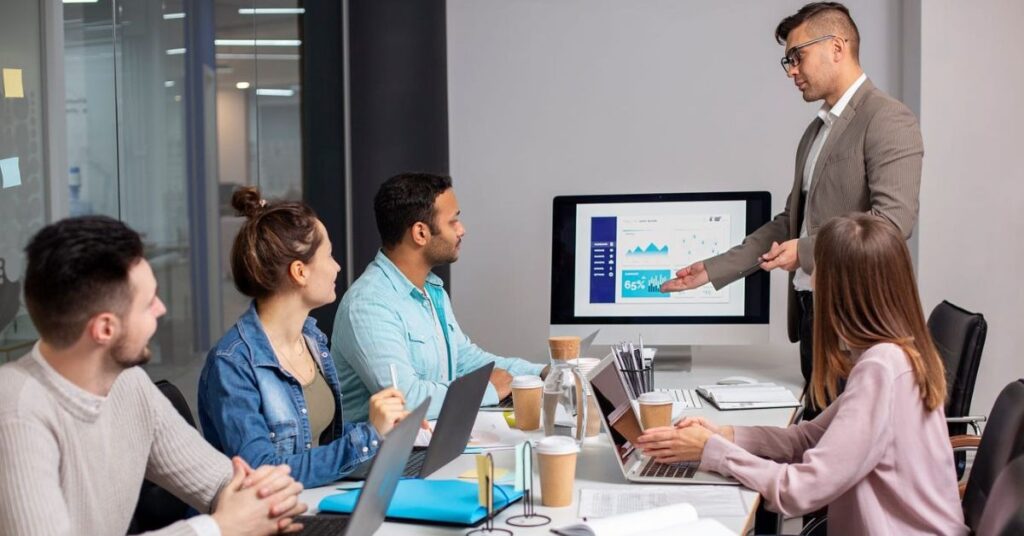
The purpose of a facilitator in today’s business climate is to establish order and encourage direction during complicated conversations. They direct emotions, they steer focus and they move people toward common ground. A good moderator fosters objective participation, while avoid foisting their own opinions on the participants.
Facilitators are even more essential with hybrid and remote work arrangements. They run online meetings, work together using project tools and keep remote teams motivated. They are meant to help digital collaboration feel as good as what happens in person.
Types of Facilitators
Facilitators are found in all sectors. There are different types, each with specific aims and intended audience. In corporate boardrooms or community halls, the goal is unchanged; to lead people through intentional conversation towards productive action.
| Type of Facilitator | Primary Focus | Setting |
| Business Facilitator | Improves teamwork, strategy, and decisions | Corporates offices |
| Educationals Facilitators | Promotes active learning | Schools and universities |
| Community Facilitator | Encourages inclusion and cooperation | Nonprofits and communities |
| Virtual Facilitator | Leads online meetings and workshops | Digital environments |
Key Skills Every Facilitator Needs
Trainers depend on a special combination of social and technical skills. What is a facilitator These abilities enable them to juggle a variety of personalities, keep the peace and guide discussions. No matter the setting – from board or community meetings, to classrooms— these skills are the building blocks of facilitation.
A facilitator should have the patience, consciousness and flexibility of a facilitator. All groups are unique and a good facilitator should tailor to the group at hand. Here are five key skills that every facilitator ought to have at their disposal, to ensure such meetings and sessions achieve productive results.
Communication and Active Listening
Is the facilitation at the heart of it good? A moderator has to verbalize, articulate and summarize points; everyone present must be hearing what’s happening. Active listening serves to discover underlying concerns and ideas that are not explicitly articulated.
When members feel comfortable trusting each other, the group and its work become more productive. People contribute more openly and enthusiastically when they feel heard. This fosters an inclusive atmosphere where cooperation will organically arise and discussion will be relevant.
Emotional Intelligence and Empathy
Facilitators can intuitively read group energy and serve up what the group needs, all to the benefit of you their client. It also helps them gracefully handle tension by understanding their own emotions and those of others. They can smell frustration or hesitation before it derails momentum.
Empathy is equally vital. A facilitator who gets participants opens up a safer, more welcoming space. This sanity is what soothes the rancor of red-hot arguments and transforms disagreements into openings for mutual understanding.
Time and Process Management
Good facilitators also manage the clock,
but do so without rushing through conversation. They plan sessions very thoughtfully to ensure that activities and goals are in unison. This entity that makes sure the team doesn’t drift.
Process management is knowing when to get out of the way. Good facilitators manage to maintain structure while being flexible enough to change directions as appropriate. This can help groups stay on-task even when the talk goes off course.
Neutrality and Conflict Resolution
A good moderator remains neutral even in the most contentious circumstances. They moderate with an even hand, and never play favorites or allow personal prejudices to interfere with the moderation of discussion. This fairness build credibility and respect.
When conflict arises, the facilitator is the intermediary who stands between opposing parties. They rely on questioning and reflection to facilitate more deliberate attention among participants.
Benefits of Having a Facilitator
Facilitators lend an element of structure, coherence and equity to any group process. They minimize misunderstandings or monopolization of the discussion, and encourage even contributions. This helps you make decisions faster and keeps your team members happier.
In American organizations, facilitators are used to increase productivity and enhance effective communication. There is research showing meeting facilitators tend to elicit the most creative ideas and best action plans. In other words, facilitation results in augmented collaboration and measurable success.
Common Challenges Facilitators Face
Facilitators may deal with issues like group rivalries, dominant individuals or time constraints. Dealing with these types of situations takes patience and planning. Good facilitators turn negative energy into positive dialogue and don’t shame or embarrass anyone.
Another challenge is maintaining neutrality. Even though I may not share the same opinions as someone else, as a facilitator, I have to be neutral. By keeping the group focused on process, they help the group to discover its own best answers rather than imposing them.
Facilitators’ Approaches Tools, and Methods
Facilitators employ a wide range of tools to maintain dynamic sessions. Visual aids such as whiteboards, flip charts and mind maps also make it more likely that participants begin to notice patterns in their ideas. Collaboration is easy with digital tools like Miro or Trello which are heaven-sent for remote teams.
They also draw on time-tested methods of brainstorming, SWOT analysis and consensus-building. These organised approaches guarantee that no stone is left unturned before the final decision-making process.
How to Become a Facilitator
If you’ve been asking yourself, “How do I become a facilitator?” the first step on this path is learning to hone communication and leadership skills. A lot of facilitators have backgrounds in psychology, in management or organizational behavior. Certifications from professional bodies like the IAF are another good way to gain credibility.
Both education and experience matter. Volunteer in local initiatives, or work in company seminars to develop facilitation skills. The best facilitators do so simply by watching how their groups behave, and changing their methods based on what they learn during real-world practice.
Importance of Facilitation in Education
In education, facilitation moves learning from a teacher-centered process to one that is student-centered. The facilitator as opposed to teacher idea is that instead of lecturing, the facilitator challenges participants to analyze concepts and compare notes. This active process aids retention as well as comprehension.
Facilitator-led students are often superior in teamwork and communication. The process also hones problem-solving skills, a crucial quality for work in today’s workplace.
Business Facilitation in the USA
Facilitator Definition for Business The business definition of facilitator is the one facilitating smooth, efficient and innovative functioning of teams. Facilitators shepherd businesses through change, getting projects done and internal conflicts resolved. They teach workshops that inform company strategies and boost employees’ morale.
For instance, Deloitte’s case study on facilitated strategy saw decision-making speed up by 35%. This illustrates what effective facilitation can do for measurable business success in all industries.
Community and Nonprofit Facilitation
In communities and nonprofits, facilitators enable diverse groups to work together. They make sure everyone is heard, particularly on public decision-making projects. Their open-mindedness is what creates understanding and brings together different groups of individuals.
American-style facilitators are trained in-house by many U.S. nonprofits these days. This makes it more efficient for them to have meetings and reach common goals in a transparent and trustworthy environment.
Next of Facilitation in Digital Endorsement
Facilitation doesn’t work the same in an organization that technology has thrown into networks. Thanks to virtual tools, feedback on the basis of artificial intelligence and online collaboration platforms, global team work is feasible. But no app can replicate human sympathy. To keep groups engaged, facilitators create a digital veneer of convenience that’s also emotionally connective.
The future of facilitation will be a hodge-podge of in-person and online tools. As workspaces continue to change, decision makers will need facilitators to help build collaboration programs that meaningfully impact growth and innovation.
FAQs
In layman terms, what is a facilitator?
A good facilitator also helps people work well together and achieve common goals.
What are the primary responsibilities of a facilitator?
They schedule and facilitate the discussions, keep time, and make opportunities for participation equally available.
What makes a good facilitator?
And patience, neutrality, empathy and communication skills all make for a good facilitator.
Do facilitators serve the same function as leaders?
No, facilitators steer processes and leaders make decisions.
How to become a facilitator?
Experience communication, become certified and build a body of work.
How are facilitators crucial to a business?
They cut down on meeting times, minimize conflict and increase productivity.
Can technology replace facilitators?
No, human empathy and understanding are irreplaceable.
Conclusion
Facilitators are the invisible hands that make collaboration happen. What is a facilitator They provide a bridge for differences to form discussion and move groups toward productive result. Without them, meetings can spiral into chaos or become too one-sided. It’s their detachment that keeps everyone centered on the same goals instead of individual opinions.
In a world with more and more connections, facilitators are the secret sauce of productive group work. Whether leading workshops to guide corporate strategy, or educational programs, or community initiatives, facilitators create spaces where all perspectives count and momentum builds.